
| Monday: | CLOSED |
|---|---|
| Tuesday: | 11:00 – 20:00 |
| Wednesday: | 11:00 – 20:00 |
| Thursday: | 11:00 – 20:00 |
| Friday: | 11:00 – 20:00 |
| Saturday: | 11:00 – 17:00 |
| Sunday: | 11:00 – 17:00 |
| Monday: | CLOSED |
|---|---|
| Tuesday: | 11:00 – 20:00 |
| Wednesday: | 11:00 – 20:00 |
| Thursday: | 11:00 – 20:00 |
| Friday: | 11:00 – 20:00 |
| Saturday: | 11:00 – 17:00 |
| Sunday: | 11:00 – 17:00 |
Forest time
17 January – 19 April 2026
Denmark Is to Become a Forest Nation Once Again. Denmark is to become a forest nation once again. What will it require of us to live more closely with nature after several centuries of moving away from it? What role has art played—historically and today—in shaping our ideas of the forest, and more concretely in the forestation projects currently taking place across the country? The special exhibition Forest time grapples with our emerging future as forest dwellers.
Who Owns the Forest? Once, Denmark was densely covered by forest. Stories were told of animals, supernatural beings, and dangerous people living deep within the heart of the woods. Later, painters and poets celebrated the Danish beech forest as a national treasure—even though the vast majority of forests had long since been cleared to make way for agriculture and settlement. Now, we are once again entering the time of the forest. As part of Denmark’s Green Tripartite Agreement, the goal is to increase forest cover by 40% by 2045, while the area of untouched, wild forest is set to double.
Taking Denmark’s current green ambitions as its point of departure, the exhibition explores what it means for the country to once again become a forest nation: What will the forests of the future look like? What will it demand of us to live closer to nature? And what role does art play, historically and today, in shaping our understanding of forests and in some of the forestation projects underway across the country?
The restoration of the forest – in nature and culture
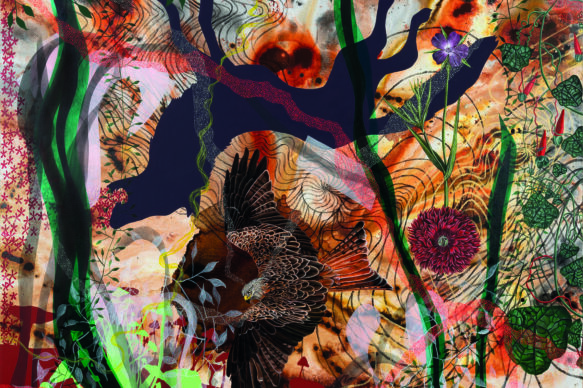
Visitors can look forward to experiencing the forest unfold through a dialogue between the museum’s own historical paintings and works by contemporary artists Ahmad Siyar Qasimi, Camilla Berner, Emmarosa Liebgen, James Aldridge, Jesper Just, Pia Rönicke, Rasmus Myrup, and Rune Bosse—all of whom take the forest as a central theme in their practice. While some artists work to re-establish humanity’s connection to nature, others engage directly in the creation of new forest areas. Through widely different expressions and approaches, the exhibition opens a discussion on the forest’s significance today and in the future.
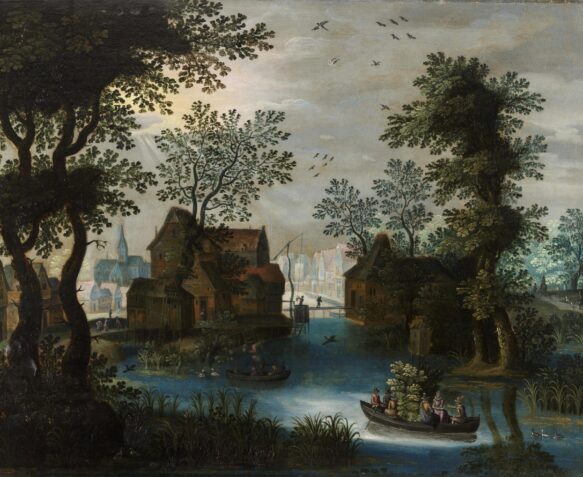
Forest time places our contemporary forest ambitions in perspective by highlighting other historical periods when forest restoration ranked high on both political and cultural agendas. Dutch hunting scenes from the early 1600s date from the final decades in which oil paintings were made on wooden panels before canvas became dominant—partly because the Netherlands had depleted its own forests, making imported timber prohibitively expensive. In Denmark, forest cover reached a historic low around 1800, when only 3% of the country was forested. During the first half of the 19th century, new scientific knowledge, war, and a growing population led to systematic reforestation. In our own time—the 21st century—the forest must once again be (re)established, now as a response to climate change, the biodiversity crisis, and a growing desire for the forest as a recreational and sensory space.
Dangerous creatures, romantic longings, and a political battleground
The forest has always held a special place in culture, representing the magical, the romantic, the mysterious, and the unconscious. It marked the boundary of civilization—the place where order ended and where what did not fit into a rational worldview could exist. In folk tales, the forest and the robbers, witches, trolls, and woodland spirits who inhabit it are often both alluring and dangerous.
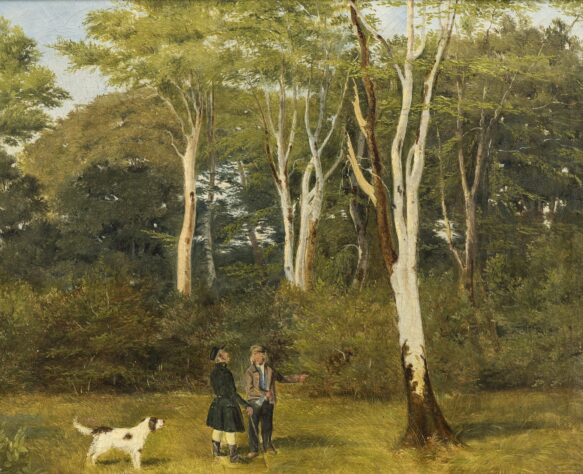
In 19th-century art, the forest was depicted as harmonious and peaceful, imbued with a deep sense of national identity. Poets described its light, foliage, and solemn atmosphere. It became a place for contemplation and community alike—but also for the individual’s connection to nature and the eternal.
Today, the forest remains both a political battleground and an object of romantic ideas and longings. As debates surrounding wolves in Jutland demonstrate, the wildness of nature may be appealing in theory, yet far more confronting in practice. Allowing nature to develop on its own terms requires humans to relinquish control. Might it be we who must adapt to nature as it moves ever closer?
The exhibition is complemented by a range of historical and cultural objects as well as interdisciplinary interpretation. In addition, a diverse programme of events—both outdoors and indoors—includes talks, forest walks, concerts, author lectures, film screenings, and a special focus on educational activities for schools. The museum will also publish an activity book based on the exhibition and the surrounding forest areas.
Forest time is supported by:
The Aage and Johanne Louis-Hansen Foundation
A.P. Mortensen og Hustrus Legat
Photos:
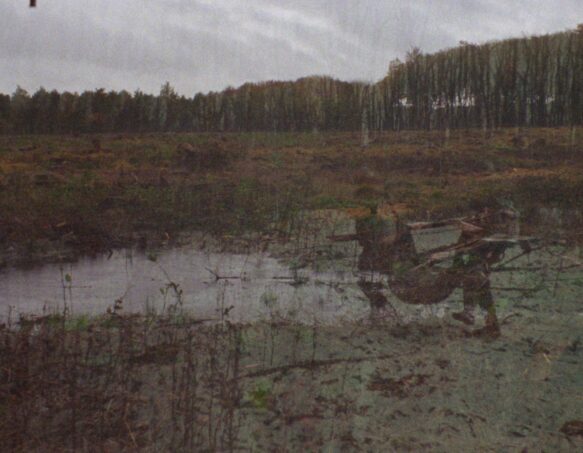
Pia Rönicke, detail from the videoinstallation Fugitive, 2026
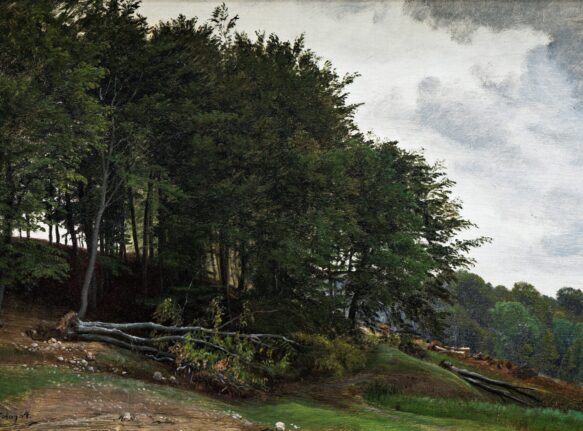
P.C. Skovgaard, Forested hills, 1864. The Nivaagaard Collection
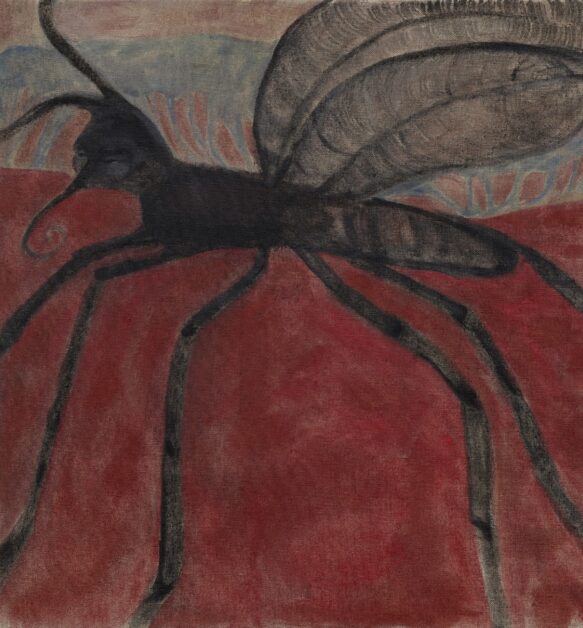
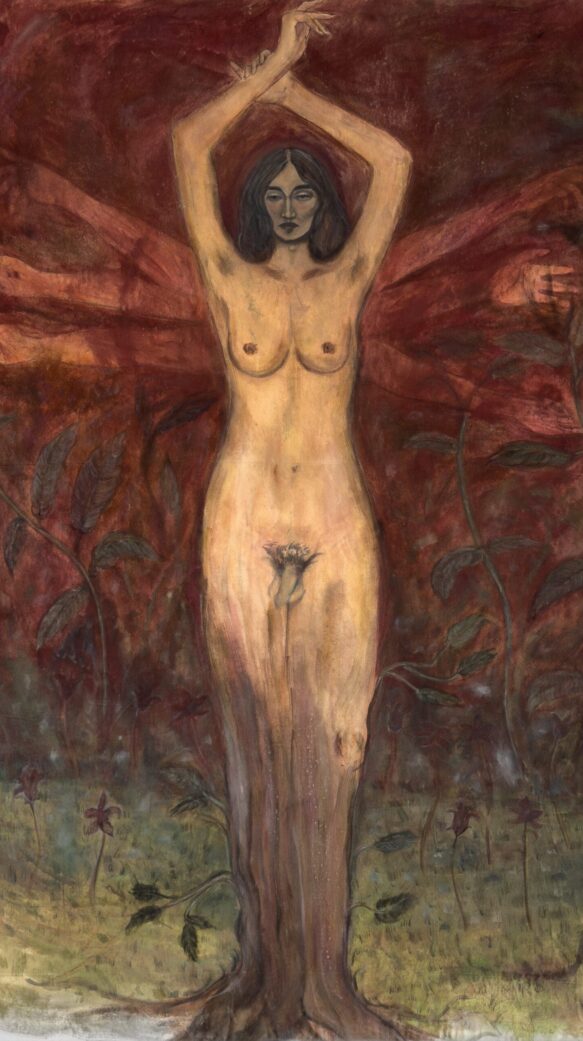
Emmarosa Liebgen, Bloodstream, 2025. Emmarosa Liebgen and Gallery Maria Friis. Photo: Malle Madsen
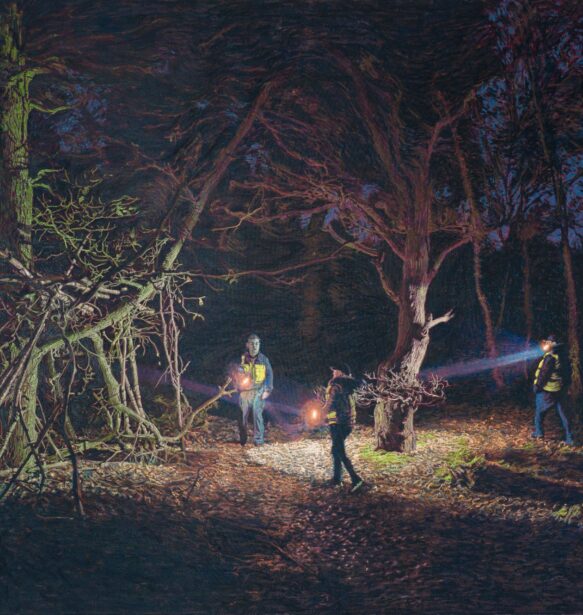
Ahmad Siyar Qasimi, Night watch, 2024. Ahmad Siyar Qasimi and Gallery Tom Christoffersen
Unknown artist, Jagtscenemesteren, Landsby ved kanal med mole og kirke, c. 1627-1620. The Agency for Culture and Palaces
Roed, Jørgen, Træer vises ud i skoven, u.å. The Nivaagaard Collection
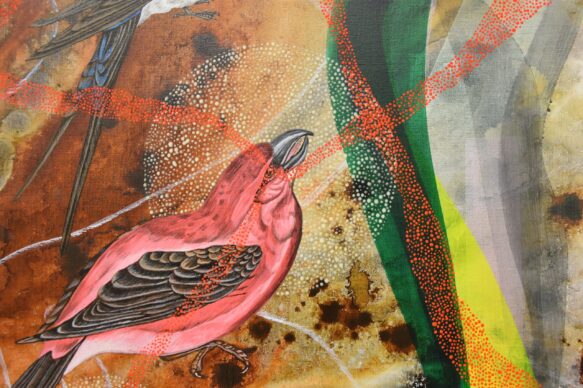
James Aldridge, detail from Slow Burn, 2022. James Aldridge and Christian Ouwens Galerie.
Emmarosa Liebgen, Roden, 2025. Emmarosa Liebgen og Gallery Maria Friis. Photo: Emmarosa Liebgen

